DISASTER DEPARTMENT INTENSIFIES PUBLIC EDUCATION ON THE PREVENTION OF CHOLERA OUTBREAKS IN COASTAL COMMUNITIES.
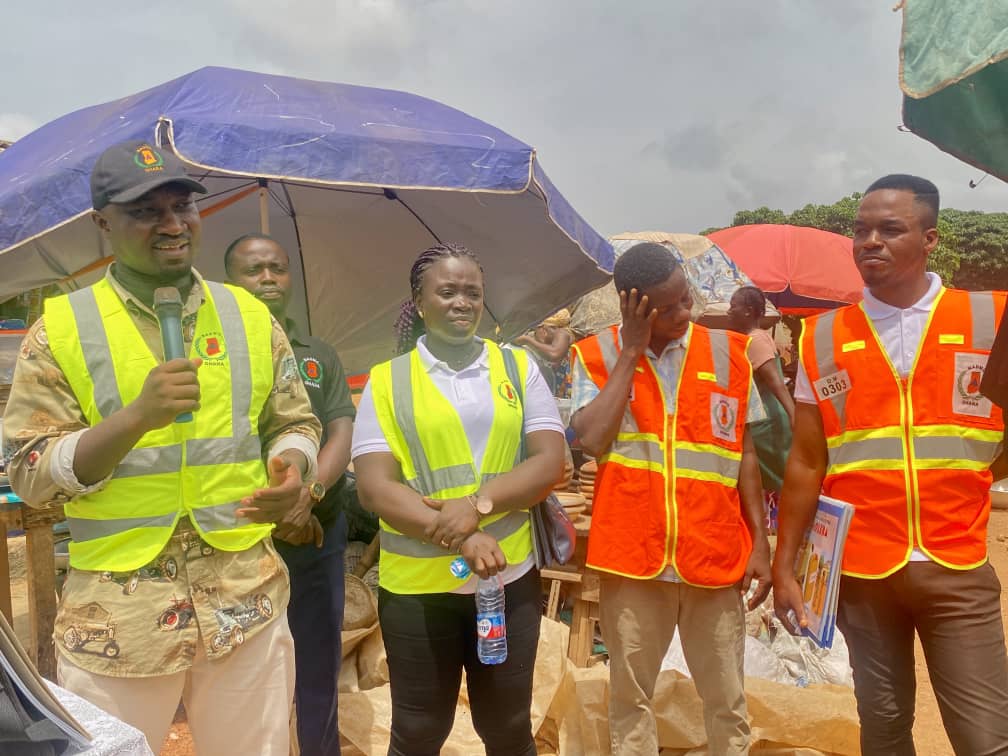
In line with the Director General’s new direction of focusing more on disaster prevention rather than waiting for disasters to happen before reacting and following the cholera concerns that emerged in late 2024 and early 2025, the Disease Epidemics unit of the Disaster Department at NADMO Central led by Mr Ebenezer Onasis Quayson and Mrs Rebecca Antwi, has been intensifying public education efforts aimed at preventing a resurgence in high-risk coastal towns in the Central Region. Given the region’s history as a hotspot for waterborne diseases, these educational campaigns are essential for building community resilience.
Armed with public educational materials provided by the Communication Department of NADMO Ghana, the cholera prevention education drive typically targets “hotspot” coastal towns like Moree (AAK), Winneba (Effutu), Ekon (Cape Coast South), Elmina (KEEA), Mumford (Gomoa West), Nyanyano (Gomoa East), Biriwa (Mfantseman), Otuam (Ekumfi) etc because coastal areas are prioritized as a result of their high population density, coupled with challenges in waste management and occasional flooding, which often leads to contaminated water sources—the primary driver of cholera outbreaks.
Key messages often include, Sanitation & Hygiene: discouraging open defecation and promoting the use of improved latrines, Safe Water Practices: encouraging the boiling of water or use of purification tablets (Aqua tabs) and proper storage in narrow -necked containers, Food Safety: advising residents to eat food whilst it is hot and to wash fruits and vegetables thoroughly with clean water before consumption and early reporting: training community members to recognize symptoms (profuse “rice-water” stools and vomiting) and to seek immediate care at their nearest health facilities.
NADMO doesn’t work in isolation so this campaign is a multi-agency effort involving the Ghana Health Service (GHS):– managing the medical response and the rollout of Oral Cholera Vaccines (OCV), Environmental Health Officers:– inspecting local food vendors and public spaces and the Information Services Department: -using “information vans” to broadcast preventive measures in local languages (Mfantse) with our Metro, Municipal, District & Sub Metro Officers as well as our Disaster Volunteers actively involved.
PREVENTION_PAYS…
═════════════════
©️ REGIONAL PUBLIC RELATIONS